
Agriculture
List of companies in Africa engaged in agriculture, farming and exporters of fresh fruits and vegetables from Africa. Database of African companies listed in the African Business Directory.

EDEN GARDENING AND LANDSCAPING LTD. verified
location_on Nairobi, Kenya
workspace_premium Agriculture
We are based in Nairobi and are one of the leading providers of all kinds of landscaping and other related services. SERVICES OFFERED Garden design Hard landscaping- block pavers, driveways, fences, water features, irrigation, lighting, outdoor furniture supply, pergolas. Soft landscaping-hedges, tree work, planting plans and planting, mulch and manure supply, garden clearance, weed control, lawns, indoor plants Kitchen gardening Maintenance Consultation- landscaping & gardening
We deal in agricultural machinery and tools and are based in Eldoret, Kenya from where we service the nearby farms and other agricultural entities in Kenya. We supply a full range of agricultural machinery for the agriculture sector in Kenya and have been known as one of the reliable suppliers of agricultural equipment and services in Kenya. Whether you are looking for small agricultural tools or large automated agricultural machinery, we have the full range to meet your requirements. Please contact us for information about our machinery and products.

Gambia Horticultural Enterprises Ltd. verified
location_on Jeshwang, Gambia
workspace_premium Agriculture
The Gambia Horticultural Enterprises (GHE) was established in October 1990 as a Sole Proprietorship. It is the Gambia's largest dealer / distributor of farm and garden inputs such as seeds, fertilizer, pesticides, garden tools / equipment, etc. It provides a one-stop-shop for the needs of the farming community. Other activities include the growing and marketing of fresh fruits and vegetables in the local and export markets in Europe thus, providing valuable market outlets for agricultural producers. It also provides professional Pest Control Services as well as Consultancy in Horticulture and Agribusiness. The business has experienced steady growth and success since its establishment, mainly due to its long-standing experience of the horticultural sub-sector, support from banks, notably Trust Bank Ltd., business partners abroad and the dedication, innovativeness and hard work of its young, dynamic staff. The company has a management and field staff of over 70 employees and growing. In almost 20 years GHE grew from a small office in the Proprietor's home to a large company located on the main Banjul, Serrekunda Highway. In addition, the company's growing business activities have enabled it to acquire farmlands totalling over 100 hectares, and start a Food Processing Center. Proprietor and Managing Director, Momodou A. Ceesay, studied both in Australia (Dip.App.Sci.; B. App.Sci. Hort) and New Zealand (M.Hort.Sci). He is very knowledgeable in all aspects of horticulture and agribusiness. Mr. Ceesay actively participates in many organisations and associations both locally and internationally. GHE is a Government Registered Vendor and can bid in governmental and NGO tenders. Mr Ceesay has been awarded the Medal of the National Honour of The Republic of The Gambia (RGM) in May 2009 during an investiture at State House by the President of The Gambia for his contribution to the development of agriculture in The Gambia.
Funwe Hill is a prominent landmark near the south end of Lake Malawi in the Rift Valley. It is part of a small chain of thickly-wooded granite hills. Funwe Farm was created at the foot of Funwe Hill in 1975 by Press Agriculture, a subsidiary of Press Corporation, the largest company in Malawi. It is 8 km from the nearest main road, with no electric power or telephone in the area. Press Agriculture built the access road, various buildings and dams on the farm. It mainly grew tobacco, for which Funwe's low altitude (600 m above sea level) and low rainfall (700-900 mm per year, during a short rainy season from December to March) are not ideal. By the early '90s Press Agriculture was reducing its number of farms, and sold Funwe to a private individual. He sold it to the current owners on 1 July 2001 in virtually derelict condition. With their long-term social investment aims in mind, the owners concentrated for the first couple of years on renovating the infrastructure and employing professional staff. The 8-km access road was rebuilt (see above) using labour-intensive methods in order to provide employment, and the five staff houses, two offices and two storage sheds were refurbished. Two new boreholes were drilled and one existing borehole refurbished – the latter supplies good quality drinking water for the staff using a solar-powered electric pump. To improve water conservation, two existing earth dams were repaired and two new ones dug.; fifty wells were dug by hand and lined with precast concrete rings, in order to provide small-scale irrigation for dry-season crops using foot-powered treadle pumps (as seen above). The whole farm was mapped using a hand-held GPS unit, to demarcate the arable areas from the woodlands. The arable land was subdivided into three equal zones, to permit a three-year crop rotation cycle. Each zone comprises about 100 hectares of usable land divided into 250 numbered 0.4-hectare plots. Soil samples were taken – most of the farm is dry upland sandy loam soil overlying granite, with a few areas of dambo (river valleys) with richer soil higher in clay and organic content. As the staff number grew and the infrastructure was improved, agricultural activity began to expand. Initially the company Funwe Farm Ltd (see separate page) carried out most of the farming using its own labour, but year-by-year it has done less and the Funwe Farmers Group (see separate page) has done more. FFL tries out new crops and informs FFG of the economics of production and sale for each; then FFG decides whether to grow that crop. To date about 20 crops have been grown, of which maize for seed, sorghum for seed and pigeon peas for seed have proved profitable, while cassava, chillies, ginger, groundnuts, paprika, sunflowers, sweet potato and turmeric have all grown but not yet been profitable. Some agroforestry species such as tefrosia and glyricidia, and some fruit species such as mangoes, grow well. Vegetables and bananas do not grow well due to the extreme heat of the dry season. In livestock FFL has become a sub-contractor to the Shire Highlands Milk Producers Association, specifically to breed heifers from indigenous mothers and imported fathers. The cross-bred offspring inherit disease resistance through their mothers and higher milk yields through their fathers. The herd also eats agricultural waste products and provides manure for the fields. Looking to the future, FFL and FFG intend to specialise in high-quality seed multiplication. The farm has processing and packing machinery and good storage facilities.
The mother company of GAFCO Industrie-Bau Nord AG (IBN), conceived a new design for integrated agricultural processing complexes in developing countries in the late 1950's. This integrated strategy was illustrated in the engineering designs and feasibility studies prepared in 1962 for a "Tema Food Complex" in Ghana: The complex was designed to integrate several agricultural processing facilities. The plans necessitated that a wheat mill, an oil mill, a cocoa plant and an animal feed mill be housed within its borders. Through the efficient use of by-products and both forward and backward integration, the former Tema Food Complex was intended to play an important role in the provision of basic food products to the citizens of Ghana. It was not until Ghana initiated a privatisation programme as part of a free market-based economic reform package that IBN was able to gain control over the former Tema Food Complex. In January 1995, an extensive rehabilitation programme was immediately started. In addition to submitting the highest performing bid to purchase the former Tema Food Complex, IBN's bid was accepted for the following reasons: IBN's strategy for the redevelopment of the debilitated complex into an integrated agricultural processing center, thus fulfilling nearly its original purpose; IBN's long term strategy to expand the integration has the potential to revitalize the Ghanaian agro industrial sector; IBN's commitment to develop the agricultural sector of Ghana along the positive economic and social benefits of IBN's plan; IBN's unique position to realize these goals due to the act that it originally designed the complex and developed the integrated strategy; and IBN's expertise in agro-industrial engineering, production and marketing in developing countries. GAFCO's history is reflected in the brand name and the symbol found on all GAFCO's products: the Sankofa bird. The Sankofa bird is a mystical character from Ghanaian history that looks back to pick up what it has left behind.
Bell Equipment (Zambia) Ltd. (KITWE) verified
location_on Kalulushi, Zambia
workspace_premium Agriculture
With the next generation on board in the business, Irvine Bell, together with sons Peter and Gary developed and patented a cane cutting attachment that enabled the Tri-Wheeler to further mechanise cane harvesting. The story of Bell Equipment began when Irvine Bell and his new bride and Company Co-Founder Eunice, settled in Zululand a few years after the Second World War. Having completed his trade apprenticeship as a Fitter and Turner on a Northern Natal Colliery where he had grown up and after serving five years in the Army Corps of Engineers during the War, Irvine Bell applied his engineering skills in building a home-made water boring machine powered by an engine from a Willys Jeep. Following two years of sinking water wells for a living, he took up an offer to start a farm machinery repair service on a sugar estate near Empangeni on the North Coast of Natal, South Africa. The enterprise's ability to repair even the most extensively damaged or worn machinery soon attracted work from further afield. When the business expanded in 1958, Irvine Bell built a new workshop on his smallholding. Now joined by his brother Robert, brother-in-law Malcolm Campbell and with Eunice keeping the books, the small enterprise, I A Bell and Company, provided a general engineering service along with limited manufacturing of Irvine's various inventions. Among them a self-loading sugar cane trailer and an overhead transfer crane for local farmers. With the family home built alongside the workshops, sons Peter, Gary and Paul grew up amongst the welding sparks and machine shop swarf in a grease filled mechanical parts intensive environment. In the early 1960's Irvine Bell saw a further opportunity to improve the sugar cane harvesting process. While a few rudimentary cane loading machines had appeared on the scene, most were adapted farm tractors and as such lacked manoeuvrability to quickly gather a load of cane. Irvine Bell's approach was to develop a whole new class of machine. Utilising emerging hydrostatic technology and borrowing hydraulic motors from an old motor grader, his prototype three wheeled loader was granted a patent and named the greatly manoeuvrable self propelled machine. Able to control each of the large drive wheels independently, the Bell Tri-Wheeler could turn instantly on its own axis. Also the simple control concept, was easily assimilated by operators without any previous machinery experience. Choosing to focus on the general engineering side of his business, Irvine Bell licensed the manufacture of his Cane Loader to a Johannesburg based locomotive company that was active in cane transport at the time. The quest to design productive mobile machinery was not lost on his sons. Peter and Gary's first go-kart, scrounged together during school holidays, could pull a small tip trailer. And with a dozer blade fitted to the front of the cart to spread gravel, the rig was put to work repairing the dirt roads on the smallholding! By the early 1970's the business had again expanded to a new facility in Empangeni's industrial area. With the construction of a greenfields port in nearby Richards Bay, the Company provided many innovative engineering solutions to the port's contracting consortium. Among them light-weight, high flotation earthmoving dumper trailers that could cope with the soft sand conditions.
Kenya Seed Company is a state Corporation that produces and markets top quality seeds for the country's farming community with an overall objective of adding value to the farming business and contributing to food sufficiency in Kenya and beyond. The company has made substantial contribution through the development ,production and provision of high quality seeds for various agro-ecological zones. The mandate of Kenya Seed Company is to carry out focused research, promote and facilitate production of high yielding, better quality certified seed to farmers and stakeholders, to enhance food self sufficiency which is an indicator of the quality of people's lives and a condition for sustainable economic prosperity.

RAS-Morogoro is the Regional Administrative Secretariat of Morogoro region and we are in the process of modernising agricultural technology in this part of Tanzania and are looking for new equipment to facilitate agricultural growth in the Morogoro region of Tanzania. We aim to mechanise agriculture activity in Morogoro region by introduction of tractors and other modern agricultural machinery and equipment.
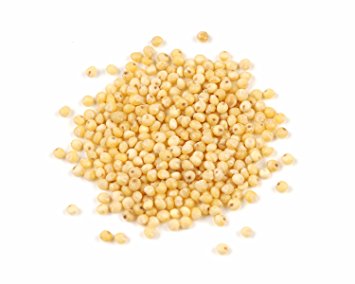
We produce agricultural products and by-products both for local distribution and also for export. GML Limited among being a member of different bodies both local and international, is also listed in the Nigerian Export promotion Council (N.E.P.C) which is the highest authentic regulatory body for Genuine business transaction in Nigeria. Our list of products includes but not limited to: millet production and processing,sorghum, rye-bran, palm pip, corn, rice, all varieties of nuts such as dried pulps, peanuts (both blanched and round shapes of all sizes), cocoa nuts, cashew nuts, guava seed and Kola nut, sugar cane, palm oil pips - crushed shells, palm front, cassava produce, Garlic (Flakes, powder and oil), chilli pepper etc Core Competence: Prompt delivery to your desired destination Good quality product Varieties of products and sizes Reduce price (low costing) And high quantity delivery. We promise that if given the opportunity we shall carry out my responsibilities with enthusiasm and diligence.
Mai Trading Enterprise was established early in 1980 as a private sector company with the goal to enhance import, export as well as production of agricultural product and industrial requirements. We also facilitate finance and supply of service to non-Government organisations. We export and promte and improve agricultural products for export of the following so far: 1- Senna Pods. 2-Arabic Gum( Acacia sengal and seyal). 3-Chewing Gum. 4- Guar Gum Powder . 5- Hibiscus. 6- Sesame and Lemon.